What is a Moroccan beauty ritual?
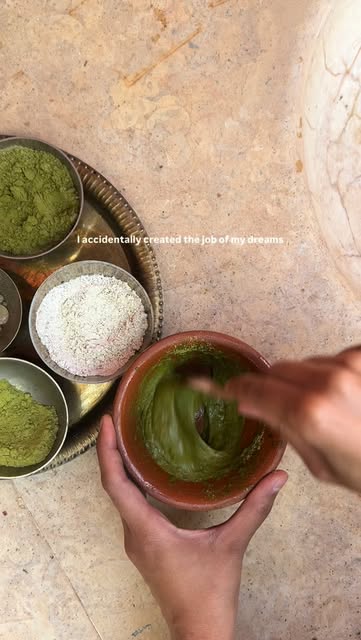
A Moroccan beauty ritual is a traditional treatment made from Moroccan plants, clays and oils, passed down from grandmother to granddaughter. Unlike a spa treatment, you don't just receive it: you make it yourself, grinding powders in a mortar and learning the story behind each ingredient.
At Oumi Rituals in Marrakech we call it a nature-to-skin ceremony: from the raw plant all the way to your skin.
The 6 ingredients you'll meet in Marrakech
| Ingredient | Where it comes from | Traditional use |
|---|---|---|
| Henna | Leaves of Lawsonia inermis | Staining hands and hair for weddings and celebrations |
| Rhassoul (ghassoul) clay | Middle Atlas mountains | Soap-free cleansing of skin and hair in the hammam |
| Damask rose | Dadès Valley (Kelaat M'Gouna) | Soothing rose water, powder for face masks |
| Saffron | Taliouine, and now the Ourika Valley | Glow masks and infusions |
| Argan oil | Argan forests of the Souss | Nourishing skin, hair and nails |
| Aker fassi | Fez, from pomegranate bark or petals | Natural tint for lips and cheeks |
What happens during an Oumi ceremony?
- Welcome: mint tea and a rose-water hand wash.
- The mortar: you grind and blend henna, rhassoul, rose and saffron while learning where they come from.
- The ritual: face masks, hair or hand care, depending on the ceremony you chose.
- Take it home: you leave with the gestures and the recipes.
Beauty ritual or hammam: which one should you book?
A hammam is a steam bath where someone scrubs you. An Oumi ritual is a hands-on workshop: you make your own treatments, understand the ingredients and learn to repeat them at home. Many travellers do both during a trip to Marrakech.
Is it a good idea for a hen party or girls' trip?
Yes, it's one of the most-booked formats. A private session can be booked on the date of your choice for the bride-to-be and her friends. Group dates, including the Saffron Ceremony in the Ourika Valley, are listed in the events calendar, often months ahead.
Safety tips before you go
- Natural doesn't mean risk-free: tell us about allergies, pregnancy or skin conditions when you book.
- If your skin is sensitive, do a patch test on the inside of your elbow 24 hours before.
- Avoid "black henna" sold in the street: it often contains PPD, a chemical dye that can cause serious reactions. Our henna is 100% plant-based.
- Everything you make is for external use only and must be kept away from the eyes.
Want to try it in Marrakech?
Book my ceremony →Frequently asked questions
How long does natural henna last?
On hands, the colour usually lasts one to three weeks, depending on your skin and aftercare.
Is rhassoul clay good for all skin types?
It suits most skins, especially combination to oily. Very dry skin can use it as a short mask followed by argan oil.
Can I do a Moroccan beauty ritual while pregnant?
Some ingredients aren't recommended. Tell us when you book and we'll adapt the ritual or advise against it.
Where can I do a beauty workshop in Marrakech?
Oumi Rituals hosts ceremonies in its Marrakech studio and in the Ourika Valley.